
Children’s Tooth Extraction – Lake Saint Louis, MO
Safely Remove Your Child’s Pesky Teeth

Under normal circumstances, you can count on Dr. Ivan to do everything possible to protect and preserve your child’s natural teeth. However, if they have become badly damaged, infected, or otherwise compromised, our team may have no choice but to recommend an extraction.
Continue reading to learn more about how our practice can safely remove your child’s pesky teeth, and feel free to contact us to schedule an appointment.
Why Choose Sunny Shore Pediatric Dentistry of Lake Saint Louis for Children’s Tooth Extractions?
- Same-Day & After-Hours Emergency Appointments
- We Accept & Maximize Dental Insurance
- Knowledgeable Board-Certified Pediatric Dentist
Reasons Why Children’s Tooth Extractions Are Necessary
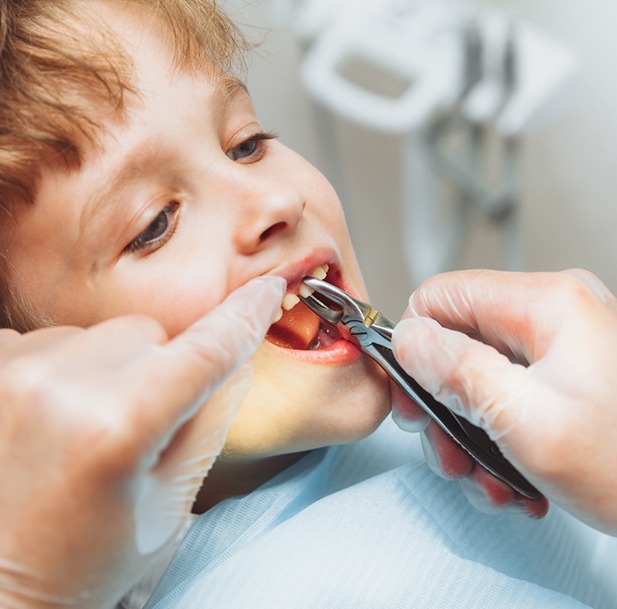
Dr. Ivan might recommend removal to address certain situations, including:
- A tooth that is so severely damaged or decayed that it is irreparable.
- There’s not enough room in your child’s mouth to successfully complete a necessary orthodontic treatment.
- An infected or cracked tooth that is too injured to be restored.
- To clear a baby tooth that hasn’t fallen out, allowing the underlying permanent tooth to grow in correctly.
If our team has recommended this procedure, we’re happy to discuss the reasons why and whether alternative treatment options might be available. We want you and your child to feel confident and comfortable moving forward, and we can share as much information as you need to proceed.
The Process of Removing Your Child’s Tooth
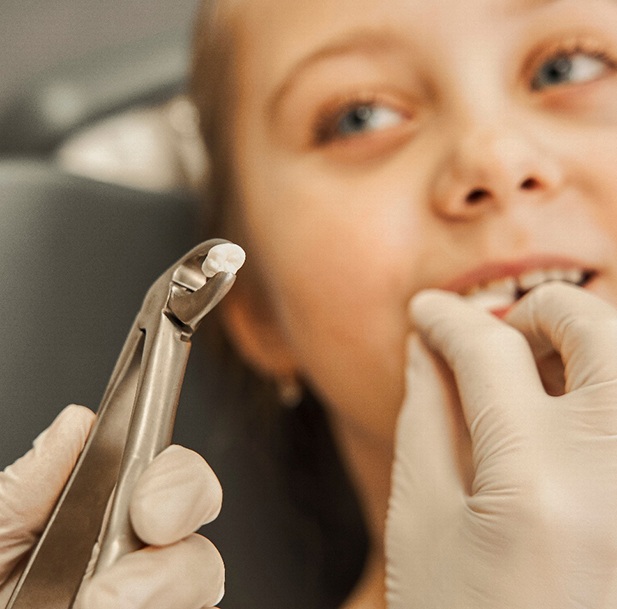
It might vary slightly based on your child’s unique circumstances, but typically, we begin their procedure by applying a local anesthetic to numb their mouths. That way, they might feel pressure while we work, but not outright pain. We also offer nitrous oxide (laughing gas) sedation to help them feel calm and comfortable throughout their treatment.
Then, for a simple extraction, we’ll gently lift the tooth from the socket using a device known as an elevator. This allows us to grasp it with forceps and wiggle it until it slips out of the gums. If your child requires a surgical or wisdom tooth extraction, we might refer you to a specialist who can assist with more severe cases.
Children’s Tooth Extraction Aftercare

Your child’s mouth must form a blood clot at the extraction site to protect the recently exposed bone, nerves, and tissues, or they might develop a painful complication known as dry socket. Our team will provide aftercare instructions for your family to follow that are intended to help them recover as quickly as possible while avoiding potential problems.
For instance, we often recommend that your child:
- Take any prescribed medications as directed.
- Rinse their mouth with salt water in the first 24 hours to keep it clean, then resume brushing and flossing when their gums have healed.
- Drink plenty of water but directly from a cup, because the force of suction from using a straw can dislodge the blood clot.
- Prop their head up at an angle while sleeping.
- Get lots of rest and avoid physical activities that elevate their heart rate or blood pressure.
Tooth Extractions FAQs
Does getting a tooth extracted hurt?
One of the first questions your child may ask you about their upcoming tooth extraction is if the procedure will hurt. Fortunately, whether they are getting one tooth pulled or multiple, the first step is always the same: numbing their mouth.
After a children’s tooth extraction in Lake St. Louis, some soreness and discomfort are to be expected, but following the aftercare instructions to a tee can help not only prevent infection but reduce swelling and promote healing.
If their pain worsens or if they begin to exhibit any signs of infection such as a fever, please contact Dr. Sedighi right away.
Is there an alternative to a tooth extraction?
The answer to whether there’s an alternative to a children’s tooth extraction in Lake St. Louis depends on the reason why Dr. Sedighi is recommending it. For example, if it’s due to excessive decay, then pulp therapy may be an option. If it is a result of periodontal disease, a deep cleaning could restore their oral health. However, if Dr. Sedighi has recommended this measure, there may be no suitable alternatives, and you can rest assured that that this is the best way to get back your child’s strong, healthy, pain-free smile.
What’s the recovery for tooth extractions like?
Following your child’s tooth extraction in Lake St. Louis, Dr. Sedighi will provide you with a list of aftercare instructions to abide by.
In addition to getting plenty of rest, one of the most important elements to a smooth recovery is caring for the blood clot forming in their socket where the tooth was removed. Neglecting to do so can cause painful complications like dry socket, which is why your child will be advised not to spit or drink through a straw until cleared by Dr. Sedighi.
It is also important that your child keeps their mouth clean, which will minimize their risk of infection. In most cases, they can begin rinsing their mouth with a mixture of salt and water, brushing their teeth, and flossing within about three days of the procedure. However, be sure to get the green light from Dr. Sedighi first.
Other best practices include changing their gauze as necessary, using cold compresses, sticking to soft foods, and taking over the counter or prescribed pain relievers as necessary.
Although the healing process will vary from patient to patient, your child should begin to feel much better around the three-day mark.
What risks are involved with tooth extractions?
The great news is that children’s tooth extractions in Lake St. Louis are considered extremely safe. However, any dental procedure comes with some risks. With tooth extractions, the primary one is infection, which can spread throughout the body if it isn’t handled quickly.
Another risk is a condition called dry socket, which can be painful and delay your child’s recovery process significantly. To prevent it, Dr. Sedighi will provide you with an extensive list of aftercare instructions, as well as a list of some common infection symptoms to look out for.